Packaging Insights
Bakery Packaging for Premium Brands: Paper Bags & Non-Woven Carriers
Explore bakery packaging solutions combining paper bags and non-woven carriers. Learn how to improve food presentation, carrying convenience, and brand visibility with custom packaging.
In the premium bakery and takeaway food industry, packaging plays an important role in the customer's final experience. Freshly baked bread, pastries, and hot snacks need packaging that considers moisture, presentation, and convenient transportation.
One common problem is condensation. When warm food is placed in packaging that restricts moisture release, water vapor can accumulate inside, potentially softening crispy crusts and affecting food texture.
For bakeries and food retailers, choosing the right packaging is therefore about more than appearance and cost. It requires matching the packaging material and structure to the food being carried.
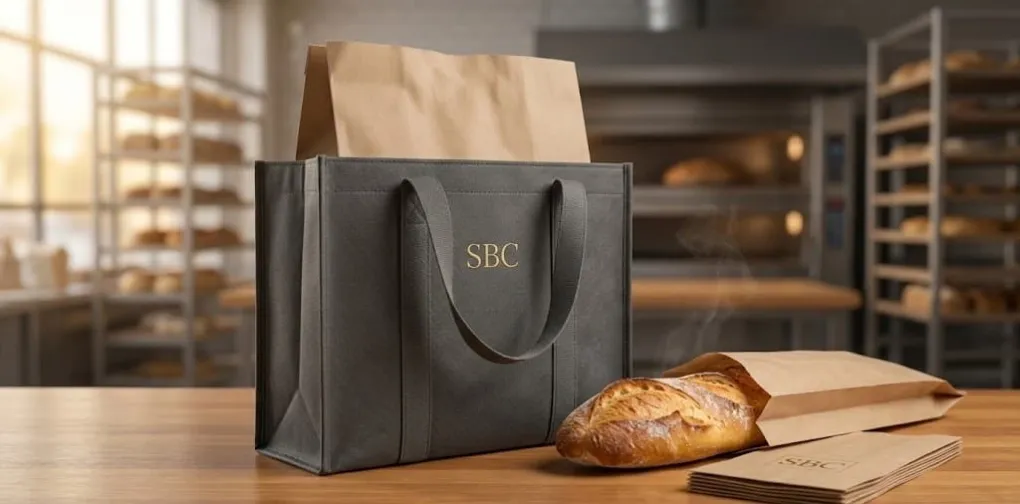
One practical approach is to combine paper bags for direct food packaging with reusable non-woven bags as outer carriers.
Here is how this packaging combination can benefit bakery brands.
1. Why Packaging Breathability Matters for Fresh Bakery Products
Freshly baked bread and hot food products continue to release moisture after leaving the oven.
When moisture becomes trapped inside packaging, condensation may form on the inner surface. For crusty bread and crispy snacks, excess moisture can soften the outer texture and reduce the quality customers expect.
Different bakery products have different packaging requirements:
- Artisan Bread: Suitable breathable packaging can help release excess moisture and maintain a more desirable crust texture.
- Pastries and Baked Goods: Packaging should consider grease resistance, product protection, and presentation.
- Hot Snacks and Takeaway Food: Packaging should allow appropriate moisture release while providing convenient handling and transportation.
The choice of material matters. Paper and non-woven fabrics have different structures and properties, and their actual performance depends on material specifications and packaging design.
A Practical Packaging Consideration
For freshly baked bread and selected hot bakery products, paper packaging is often a suitable inner packaging option because it allows moisture exchange.
Non-woven fabric also has an air-permeable fiber structure, although its permeability varies with fabric weight, density, and construction.
However, no material automatically guarantees that food will remain crispy or warm. Product temperature, cooling time, packaging closure, delivery conditions, and the type of food all influence the final result.
2. The Paper + Non-Woven Combination for Premium Delivery
A common question from bakery buyers is:
"If we already use paper bags, why do we need an additional non-woven outer bag?"
The answer is that the two bags serve different purposes.
Tier 1: Inner Packaging – Paper Bags
Depending on the paper grade and construction, they can offer:
- A natural and attractive appearance for bakery products.
- Convenient packaging for bread, pastries, and takeaway items.
- Options for grease-resistant paper and suitable food-contact applications.
- Custom printing to display bakery logos and brand information.
For products with oil or grease, buyers should select an appropriate paper grade and grease-resistant treatment rather than assuming that all paper bags provide the same protection.
Tier 2: Outer Carrier – Non-Woven Bags
A non-woven carrier provides an additional carrying solution for bakery orders and multiple packaged items.
Its advantages include:
- Practical Carrying Structure: Bottom and side gussets can provide additional space for carrying multiple packaged products.
- Reusable Design: Customers can reuse the outer bag for shopping and everyday purposes.
- Custom Branding: Large printable surfaces provide opportunities to display bakery logos and brand messages.
- Flexible Specifications: Bag dimensions, fabric weight, handles, colors, and printing can be customized.
The outer carrier is intended for transporting packaged food products, not as a direct food-contact container unless the material and construction have been appropriately assessed for that use.
Why Use Both Bags?
The paper bag serves the immediate packaging needs of the food, while the non-woven carrier provides an additional carrying solution and more opportunities for brand exposure.
This combination can be particularly useful for premium bakeries, gift-box orders, multiple-item purchases, and catering takeaway services.
3. Choosing the Right Non-Woven Bag for Bakery Packaging
When selecting an outer carrier for bakery products, buyers can consider two common non-woven bag constructions:
A practical and economical option for standard retail packaging, promotional activities, and general carrying applications. They are available in different sizes, colors, and printing options.
Suitable for applications requiring more customized structures, stitched seams, and flexible handle reinforcement. They can be designed with bottom and side gussets to accommodate bakery boxes and multiple packaged products.
Both constructions can be customized according to the required dimensions, fabric weight, carrying needs, and budget.
The best choice depends on the intended application and the specifications of the finished bag. Neither construction should automatically be considered more breathable or stronger without considering the actual material and product design.
An Important Design Consideration: Bag Opening
For warm bakery products, an open-top outer carrier can be a practical choice. It makes the order easier to access and avoids unnecessarily enclosing the entire package in another closed layer.
The inner food packaging should still be selected according to the product's moisture, grease, and protection requirements.
4. Creating More Value Through Coordinated Bakery Packaging
For premium bakeries, packaging is also part of the brand experience.
A coordinated combination of paper bags and reusable non-woven carriers can create a more consistent presentation across different products and order sizes.
Consider a bakery offering the following products:
- Fresh artisan bread in custom paper bags.
- Pastries and baked goods in suitable paper packaging.
- Multiple purchases placed inside a branded non-woven carrier.
- Larger takeaway and catering orders using appropriately sized outer bags.
By coordinating the colors, printing, dimensions, and overall appearance of the packaging, bakeries can create a recognizable brand presentation.
The Marketing Value of Reusable Carriers
Unlike disposable inner packaging, a reusable outer carrier may continue to be used after the original purchase.
When customers reuse a branded non-woven bag for shopping or everyday activities, the bakery logo can gain additional visibility.
This creates another opportunity for brand recognition beyond the original transaction.
5. How to Choose the Right Bakery Packaging
Before placing an order, bakery buyers should consider several practical points:
1. Food Type
Is the packaging intended for crusty bread, pastries, fried snacks, or multiple takeaway products? Different foods have different moisture and grease requirements.
2. Inner Packaging Material
Choose a suitable paper grade, size, and construction. Confirm food-contact suitability and grease resistance where required.
3. Outer Bag Construction
Consider whether a heat-sealed or sewn non-woven bag is more appropriate for the expected load, bag dimensions, and frequency of use.
4. Bag Dimensions and Capacity
The outer carrier should accommodate the inner paper bags, bakery boxes, or takeaway containers without excessive movement or compression.
5. Branding and Customization
Coordinate the colors, logo placement, printing method, and overall packaging appearance to match your bakery's brand identity.
The best packaging solution is not necessarily the most expensive one. It is the combination that protects the products appropriately, makes transportation convenient, and supports the brand's presentation.
Conclusion: Better Packaging for a Better Bakery Experience
In the premium bakery and takeaway food market, packaging should do more than simply hold a product.
Paper bags provide a practical inner packaging option for suitable bakery products, while non-woven carriers add carrying convenience, reusable functionality, and branding opportunities.
Combining the two can create a coordinated packaging solution for bakeries that want to improve product presentation and offer customers a more convenient carrying experience.
At SHOPPING BAG CO., we offer custom paper bags and non-woven bags for bakery, retail, and promotional applications.
From paper bag specifications to non-woven bag dimensions, fabric weights, heat-sealed or sewn construction, handle designs, and custom printing, we can help you develop packaging solutions that match your products and brand requirements.
Looking for coordinated packaging for your bakery?
Contact us to discuss your paper bags, non-woven carriers, custom sizes, printing requirements, and order quantities.
Let's create packaging that works for your products and represents your brand.